
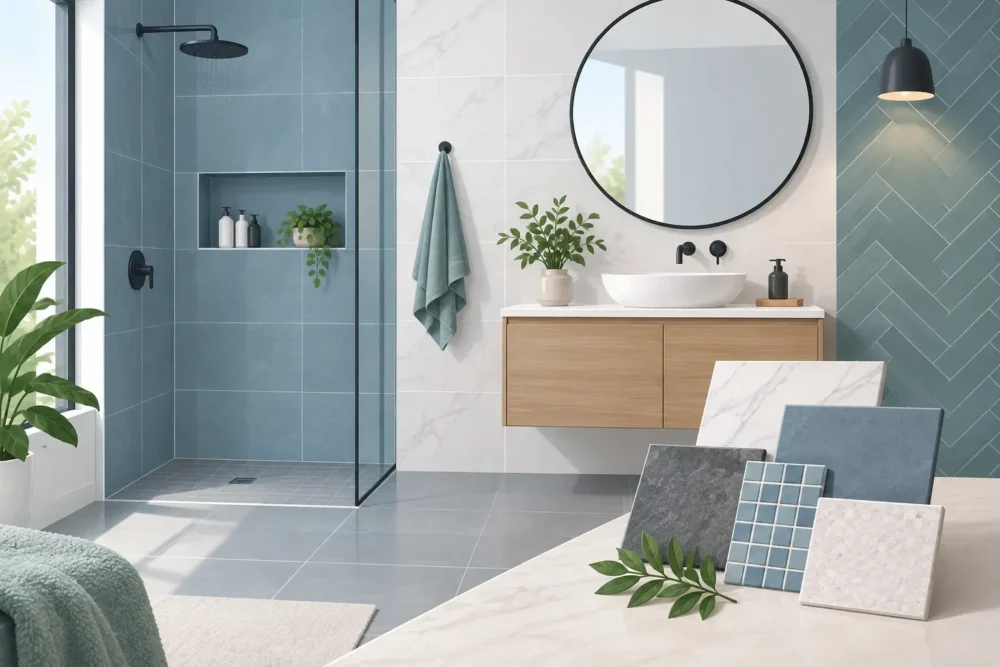
A bathroom can look fresh on the day a remodel is finished and still develop problems later if the materials are not right for moisture. In Central Florida, humidity is part of daily life, so choosing the best tiles for humid bathrooms is about more than finding a color or pattern you like. The right tile should handle steam, splashes, regular cleaning, and years of use while helping your bathroom feel polished and comfortable.
For most homeowners, porcelain tile is the strongest all-around answer. But the best choice can change depending on whether you are tiling a shower floor, shower wall, main bathroom floor, or accent wall. A well-planned bathroom uses each material where it performs best.
Why Humidity Changes the Tile Decision
Heat and moisture put a bathroom under steady pressure. Hot showers fill the room with steam, water reaches floors and walls, and poor ventilation can leave surfaces damp long after the shower is off. Tile is naturally suited to wet areas, but not every tile absorbs water at the same rate or offers the same level of traction.
The installation behind the tile matters just as much. Even high-quality tile can fail when the shower substrate, waterproofing, thinset, grout, or caulk is not properly selected and installed. Cracked grout, loose tiles, mold growth, and water damage often begin behind the finished surface, where homeowners cannot see the problem right away.
That is why material selection and skilled installation should work together. A dependable bathroom remodel is built to look good now and hold up through Florida’s humidity for years to come.
Best Tiles for Humid Bathrooms by Location
Porcelain tile for bathroom floors and showers
Porcelain is usually the top recommendation for humid bathrooms. It is dense, durable, and highly resistant to water absorption. It also comes in a wide range of colors, sizes, textures, and finishes, including convincing stone and wood looks without the maintenance concerns of natural materials.
For a main bathroom floor, choose porcelain with a matte, textured, or slip-resistant finish. A glossy surface can look beautiful, but it may become slippery when wet. This is especially worth considering for family bathrooms, aging-in-place remodels, and homes with children.
Porcelain is also an excellent shower wall material. Larger porcelain tiles can create a clean, modern look with fewer grout lines. Fewer joints make routine cleaning easier, although larger tiles require a properly prepared wall for a flat, professional finish.
For shower floors, smaller porcelain mosaics are often the practical choice. Their additional grout lines provide more grip underfoot and help the installer create the slope needed to direct water to the drain. A large-format tile may work in a shower only when the design and drain system are planned carefully.
Ceramic tile for walls and lower-moisture areas
Ceramic tile is a good value for bathroom walls, backsplashes, and decorative areas outside the direct shower spray. It is generally more budget-friendly than porcelain and offers plenty of attractive design options, from classic subway tile to colorful handmade-look pieces.
Ceramic can also be used in many shower wall applications when it is properly installed over a waterproofed system. The trade-off is that ceramic is usually less dense than porcelain. For homeowners who want the most durable option in a heavily used shower, porcelain is often the safer long-term investment.
Ceramic makes sense when you want to stretch the budget without giving up a finished, custom appearance. For example, porcelain on the shower floor and main bathroom floor, paired with ceramic wall tile, can be a smart balance of performance and cost.
Natural stone for a high-end look with more upkeep
Marble, travertine, slate, and other natural stone tiles can make a bathroom feel truly special. Each piece has variation, which gives stone a character that manufactured tile cannot completely duplicate. For a primary bathroom or a carefully designed feature wall, that natural look can be worth it.
However, stone is not a low-maintenance choice in a humid bathroom. Many natural stones are porous and need sealing to help resist moisture, soap residue, and stains. Some can also etch or discolor when exposed to certain cleaners. A textured stone floor may offer good traction, but it can require more detailed cleaning than porcelain.
If you love the look of marble or travertine but want easier maintenance, porcelain stone-look tile is often a practical alternative. It delivers a similar visual style with better water resistance and simpler care.
Glass and mosaic tile for accents
Glass tile can add brightness and personality to a shower niche, vanity backsplash, or accent band. It reflects light well, which is useful in smaller bathrooms with limited natural light. Mosaic sheets also make it easier to tile curved details or compact spaces.
Glass is best used as an accent rather than the main flooring material. It can be slippery underfoot, and certain glass tiles require specific setting materials and careful handling during installation. In a shower, a glass mosaic niche or feature wall can provide a custom touch without creating unnecessary maintenance concerns.
Tile Finish Matters as Much as Tile Type
When selecting bathroom tile, homeowners often focus first on color, size, and pattern. The finish deserves equal attention. A polished tile reflects light and can make a small room feel brighter, but it is not always the best choice for a wet floor.
Matte and lightly textured porcelain tiles are generally the better fit for floors exposed to water. They provide a more secure surface while still offering many modern designs. For shower walls, polished, satin, or glossy finishes can work well because walls do not face the same slip risk.
Ask to see tile samples in your own lighting before making a final decision. A soft gray tile may look warm in a showroom and cooler under your bathroom lighting. Looking at samples alongside vanity colors, paint, fixtures, and shower glass helps prevent expensive design regrets.
Grout Is Part of the Moisture Plan
Tile gets most of the attention, but grout has a major effect on how a bathroom performs and how easy it is to maintain. Light grout can make a room feel open and clean, while darker grout can define a pattern and hide everyday dirt more effectively.
For humid bathrooms, quality grout and proper sealing where needed are essential. Epoxy grout offers strong stain and moisture resistance, though it costs more and requires experienced installation. Cement-based grout can also perform well when correctly installed and maintained. The right option depends on the tile, joint size, location, and project budget.
Caulk should be used at changes in plane, such as where shower walls meet each other, where walls meet the floor, and around certain fixtures. Grout is not designed to flex like caulk. Using the correct materials in the correct places helps prevent cracking and water intrusion.
Size and Layout Can Make Cleaning Easier
Large-format tile is popular because it creates a clean, contemporary surface with fewer grout lines. On bathroom floors and shower walls, that can mean less grout to scrub. A larger tile can also make a modest-size bathroom feel more open.
Still, bigger is not always better. Small mosaics are often the better choice for shower floors because of drainage and traction. Patterned tile can be an excellent choice for a powder room or main floor, but a busy pattern may compete with a dramatic shower wall or bold vanity.
A balanced design usually starts with one feature. You might choose a statement shower wall with quieter floor tile, or use a patterned floor with simple wall tile. This approach gives the room personality without making it feel crowded.
Do Not Let Good Tile Hide Poor Preparation
A beautiful tile selection cannot compensate for an improperly built shower. Before tile goes up, wet areas need the right substrate, waterproofing system, shower pan preparation, and drain slope. These details protect the structure of the home and support the tile finish over time.
Ventilation also matters after the remodel is complete. Use a properly sized exhaust fan during showers and for a while afterward. Wipe down shower glass when possible, address damaged caulk promptly, and use cleaners suited to your tile and grout. These simple habits protect your investment and keep the room looking its best.
For Orlando homeowners, Work Tile LLC helps make these choices manageable by matching durable materials with the way each bathroom is actually used. A guest bath, a busy family shower, and a spa-like primary suite may all need different solutions.
The best bathroom tile is the one that fits your moisture exposure, safety needs, maintenance preferences, design goals, and budget. Start with porcelain where durability matters most, choose a finish that feels secure underfoot, and make sure the installation is built to keep water where it belongs. That is how an updated bathroom stays extraordinary long after the first reveal.