
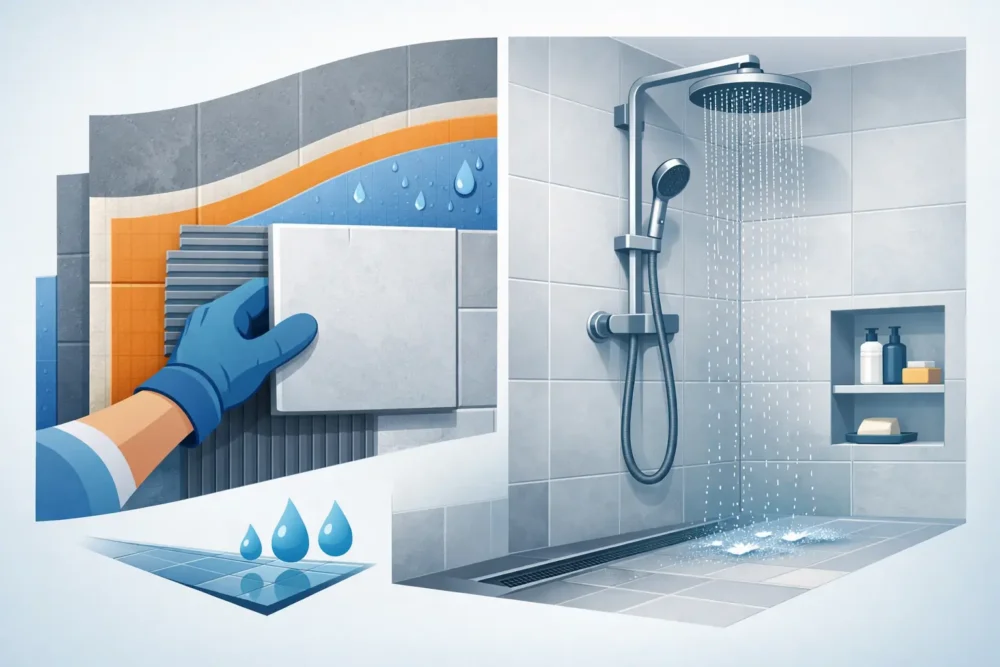
A beautiful shower can still fail behind the walls. Cracked grout, loose tile, or a stain on the ceiling below often points to water getting past the finished surface. Proper waterproof shower tile installation protects the structure of your home before the first tile is set, giving your bathroom the durability and clean finished look you expect from a renovation.
For Orlando homeowners, this work matters even more in bathrooms with frequent use, older plumbing, or showers that have seen years of moisture and humidity. Tile is the visible finish, but waterproofing is what helps the shower perform well over time.
Why Tile and Grout Are Not Waterproof
Many homeowners assume a tiled shower is automatically waterproof. Tile is water-resistant, and quality grout helps close the joints, but neither is a complete water barrier. Grout is porous to some degree, and small changes in the home can eventually create hairline cracks around corners, fixtures, and transitions.
Water that gets through the tile assembly needs a properly installed waterproof layer behind or beneath it. Without that protection, moisture can reach drywall, framing, subflooring, and insulation. The result may be mold growth, soft walls, loose tile, unpleasant odors, or expensive repairs that extend beyond the shower itself.
A shower should be built in layers. The finished tile, grout, caulk, drain, shower pan, waterproof membrane, and wall preparation all need to work together. Skipping one detail to save time or money can create a problem that stays hidden until real damage has already occurred.
What Proper Waterproof Shower Tile Installation Includes
A dependable installation begins with a sound substrate. In a shower, standard drywall is not the right surface behind tile in wet areas. Professional installers typically use an approved backer board or a shower wall system designed to support tile and moisture protection.
The waterproofing layer comes next. Depending on the shower design and materials selected, this may be a sheet membrane, a liquid-applied membrane, or a complete manufacturer-approved shower system. The right choice depends on the condition of the bathroom, the type of shower pan, the tile size, and the details around niches, benches, curbs, and plumbing fixtures.
The shower pan and drain connection
The shower floor is one of the most important parts of the project. Water must slope toward the drain beneath the tile, not sit flat under the finished surface. A properly built shower pan directs moisture where it belongs and connects correctly to the drain assembly.
This is especially important with custom walk-in showers. Large-format floor tile can look modern, but it may not work well on a floor that requires precise slope unless the layout and drainage are planned carefully. Smaller mosaic tile is often a practical choice because it follows the slope more easily and provides more grout joints for traction.
Corners, seams, and penetrations
Most shower leaks begin at transitions, not in the middle of a tile. Wall corners, the wall-to-floor connection, shower curbs, niches, benches, and plumbing openings need careful attention. These areas move slightly over time and receive repeated water exposure.
Membrane seams should be sealed according to the system requirements. Fastener holes need to be treated correctly. Pipe openings and mixing-valve areas should be waterproofed without making future plumbing service unnecessarily difficult. These details are not glamorous, but they are where skilled installation makes the difference.
Niches and benches need extra planning
A recessed shampoo niche is convenient and can give a shower a custom appearance. It also creates several extra corners where water can collect if it is not built correctly. The bottom of a niche should slope slightly toward the shower so water drains instead of sitting against the back wall.
Built-in benches need the same care. The top must slope toward the drain, and every joint around the bench must be protected. A bench that looks solid but holds water can become a source of long-term damage.
Tile Choices That Support a Long-Lasting Shower
The best tile is not always the most expensive tile. It is the tile that fits the space, your maintenance preferences, and the installation plan. Porcelain is a popular shower choice because it is dense, durable, and available in many colors, textures, and styles. Ceramic can also work well on shower walls when it is rated for the intended use.
Natural stone creates a high-end look, but it usually requires more maintenance and proper sealing. Some stones are more absorbent than porcelain, and their appearance can change if water or mineral deposits are allowed to sit on the surface. For homeowners who want an easier-care shower, porcelain that resembles marble, travertine, or wood can offer a similar design effect with less upkeep.
Large wall tiles can reduce grout lines and create a clean, modern appearance. They also require flatter walls and precise layout work. Smaller tiles offer more design flexibility, particularly in niches and around curved or uneven areas. The right choice depends on the shower dimensions and the look you want to bring into the bathroom.
Common Mistakes That Lead to Shower Failures
A shower can look finished on day one and still have problems built into it. One common issue is tiling over an existing damaged surface without addressing what is underneath. If the old shower has moisture damage, loose backing, or an improper pan, new tile only covers the issue temporarily.
Another mistake is relying on caulk or grout sealer as the main waterproofing plan. Caulk is necessary at changes of plane, such as wall corners and the wall-to-tub connection, but it is not a replacement for a waterproof membrane. Sealer can help grout resist staining, depending on the grout type, but it does not turn the entire shower into a watertight system.
Poor slope is also a major concern. Water should move to the drain, not pool in corners or along the curb. A shower that drains slowly may leave standing water, soap residue, and mineral buildup that make cleaning harder and can affect the life of the installation.
Finally, rushing the project can cause trouble. Waterproofing products, thinset, grout, and sealants require proper cure times. Using the shower too early can interfere with the materials before they have reached their intended strength.
Planning for Your Orlando Bathroom Remodel
Before selecting tile, think about how the shower is used every day. A busy family bathroom may benefit from durable porcelain, easy-to-clean wall tile, and slip-resistant floor mosaics. A primary bathroom may call for a larger walk-in shower, a frameless glass door, a bench, or a statement tile wall.
Budget should be part of the discussion from the beginning. A simple shower surround with reliable waterproofing may be the right investment for one home, while another homeowner may want custom niches, upgraded fixtures, decorative accents, and new shower glass. The goal is not to add features that do not serve your needs. It is to build a shower that feels polished, functions well, and supports the value of your home.
An experienced tile contractor can help you balance design choices with the practical requirements behind the walls. Work Tile LLC approaches shower remodeling with that full-picture mindset, helping homeowners make clear decisions about materials, layout, and the details that protect the finished work.
Caring for a Newly Tiled Shower
Once your shower is complete, simple routine care helps preserve its appearance. Use a squeegee or soft cloth after showering when possible, especially on glass and smooth wall tile. Clean with products appropriate for your tile and grout, avoiding harsh acids or abrasive tools that can damage finishes.
Check caulk lines periodically around corners, fixtures, and the shower door. Caulk can wear over time, particularly in a heavily used shower. Addressing a small gap early is far easier than waiting for moisture to reach the materials behind the tile.
If you notice persistent mildew, cracked grout, loose tile, a musty smell, or water outside the shower area, do not assume it is only a cleaning issue. Those signs deserve a professional look before a manageable repair becomes a larger remodeling project.
A well-built shower is more than a fresh tile pattern and new fixtures. It is a carefully prepared space that gives you confidence every time you turn on the water – and lets you enjoy the bathroom of your dreams without worrying about what is happening behind the walls.