
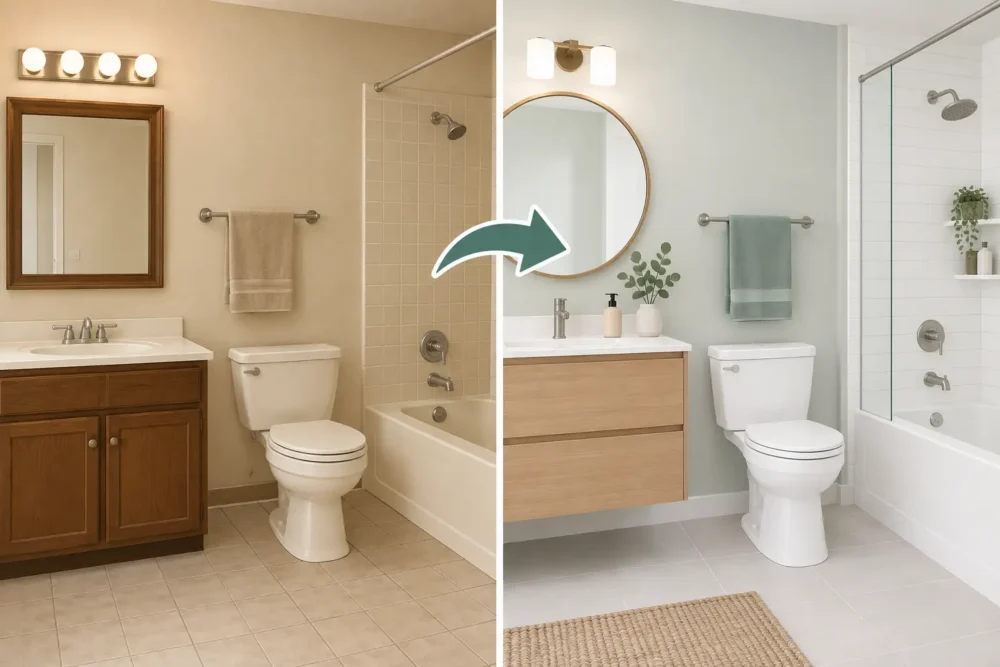
A bathroom can feel old long before anything is technically broken. Beige wall tile, a stained fiberglass shower, worn flooring, weak lighting, and a vanity with little storage can make the room feel smaller and harder to use every day. For homeowners asking how to update a dated bathroom, the best answer is usually not to replace everything at once. Start with the features that affect comfort, moisture protection, and the overall look of the room.
A thoughtful remodel can turn an outdated bathroom into a cleaner, brighter space that fits your home and your budget. The key is choosing upgrades that work together instead of adding trendy pieces that may feel dated again in a few years.
Start With What Is Actually Dating the Room
Before choosing tile or paint colors, take a close look at the bathroom’s condition. Some dated features are cosmetic, while others point to water damage or installation problems that need attention first. A cracked shower surround, loose floor tile, soft subfloor, recurring mildew, or damaged grout should not be covered up with a quick surface update.
In many established Orlando homes, bathrooms also show the effects of humidity and years of daily use. A shower may need new waterproofing behind the tile, not just fresh grout on the surface. Flooring may look worn because the material was never suited to a wet room. Addressing those underlying issues protects the investment you make in the visible finishes.
If the layout functions well, keeping plumbing in the same locations can help control costs. Moving a toilet, shower drain, or vanity plumbing may be worthwhile when the room is cramped or poorly planned, but it adds labor and can uncover additional work behind the walls. A contractor can help you decide whether a layout change will truly improve the bathroom or simply stretch the budget.
Update the Shower First for the Biggest Visual Change
The shower is often the focal point of a bathroom, especially in a smaller guest bath or primary suite. Replacing an old fiberglass insert or outdated tile surround can immediately make the room feel more current and more custom.
A tile shower surround gives homeowners more flexibility with color, texture, and pattern. Large-format porcelain tile can create a clean, modern look with fewer grout lines. Subway tile remains a dependable choice when installed with a thoughtful layout, such as a vertical stack or a contrasting grout color. For a more relaxed, natural style, stone-look porcelain or soft neutral tile can bring warmth without the maintenance concerns of natural stone.
Do not select shower tile based on appearance alone. The installation behind it matters just as much. Proper waterproofing, durable setting materials, carefully finished corners, and well-planned niches help prevent leaks and keep the shower easier to maintain. A recessed shower niche is a practical addition that eliminates clutter from shower caddies while making the finished space feel more intentional.
Shower glass can make another major difference. A clear glass door opens sightlines across the room and lets tilework stand out. It is especially useful when the bathroom feels enclosed. The trade-off is that clear glass shows water spots more easily than patterned or frosted options, so homeowners who prefer lower daily maintenance may choose a different glass finish or a shower curtain in a secondary bath.
Choose Bathroom Tile That Looks Good for Years
Tile is one of the strongest ways to update a dated bathroom because it brings together durability and design. It can transform a floor, shower, accent wall, or backsplash area around a vanity. Still, the most dramatic tile is not always the best long-term choice.
For bathroom floors, porcelain tile is a practical option because it handles moisture well and is available in many styles. Wood-look tile offers the warmth of wood with better water resistance. Stone-look tile can give a bathroom a more upscale appearance without requiring the sealing and upkeep associated with some natural materials.
Scale matters. A small bathroom does not always need small tile. Larger floor tiles can make the room look less busy, while a mosaic may be useful on a shower floor where more grout lines can improve traction. If you choose a bold patterned tile, consider using it in one area, such as the floor or a shower niche, and keep the remaining surfaces simpler. That balance gives the room personality without overwhelming it.
Grout color deserves attention, too. Light grout can create a soft, continuous look, but it may show discoloration more easily in high-use areas. Medium-tone grout is often a practical middle ground for family bathrooms. Dark grout adds contrast, though it can make a small tile pattern look busier. The right choice depends on the tile size, the amount of natural light, and how much maintenance you want to take on.
Replace the Vanity and Improve Storage
An old vanity can make a bathroom feel outdated even after the walls and floor have been refreshed. Replacing a bulky cabinet with a better-sized vanity often improves both the appearance and day-to-day function of the room.
Look for storage that matches how your household uses the bathroom. Drawers are helpful for smaller toiletries, while a larger cabinet can hold towels and cleaning supplies. In a tight bathroom, a floating vanity can reveal more floor and create a lighter appearance. In a primary bath, a wider vanity with additional counter space may be the better investment.
The countertop, sink, and faucet should complement the rest of the finishes rather than compete with them. A simple white or soft gray countertop works well with many tile choices and gives future updates more flexibility. Matte black, brushed nickel, and warm brass fixtures can all work in a modern bathroom, but it is best to use one main metal finish throughout the room for a more finished look.
Make Lighting Work Harder
Poor lighting is one of the fastest ways to make a clean bathroom feel tired. A single ceiling fixture often creates shadows at the vanity, which makes everyday grooming more difficult. Better lighting can change the room without requiring a major reconstruction project.
Use layered light where possible. Overhead lighting brightens the full room, while vanity lighting helps with shaving, makeup, and skincare. A lighted mirror can be a practical choice in a compact bathroom, but it should provide useful illumination rather than serve only as decoration. Choose bulbs that create a clean, comfortable light instead of an overly blue or harsh effect.
If privacy allows, make the most of natural light. A window treatment that lets daylight in while maintaining privacy can make neutral tile and paint colors look warmer and more inviting.
Refresh the Details After the Major Work
Once the shower, tile, vanity, and lighting are in place, smaller details complete the update. New towel bars, a toilet paper holder, mirror, vent cover, and door hardware can make a noticeable difference when their finishes coordinate. Fresh paint also helps tie the room together, especially after replacing old tile or removing a dated wall treatment.
Avoid treating accessories as an afterthought. A new shower and vanity can still look unfinished beside yellowed switch plates, rusted registers, or an old medicine cabinet. These are relatively small decisions, but they help the bathroom look professionally planned.
Set a Budget Around Priorities, Not Just Products
A realistic bathroom budget should account for preparation and installation, not only visible materials. Tile, fixtures, and glass are important, but demolition, waterproofing, plumbing adjustments, floor preparation, and skilled installation all affect the result.
One way to stay on track is to identify your non-negotiables early. Maybe the priority is a walk-in tile shower, durable flooring, or a vanity with better storage. Spend where daily use and moisture exposure demand quality, then simplify in other areas. For example, a classic field tile may leave room in the budget for a custom niche, better shower glass, or a more functional vanity.
Work Tile LLC helps Orlando-area homeowners make these choices with practical design recommendations, quality materials, and professional tile installation. As a family-owned, fully insured remodeling contractor, the goal is to make the process manageable while delivering a bathroom that feels right for your home.
A dated bathroom does not need every trend to feel new. Choose durable surfaces, useful storage, better lighting, and a shower built to handle daily life. When each upgrade has a purpose, the finished room will feel extraordinary long after the renovation is complete.