
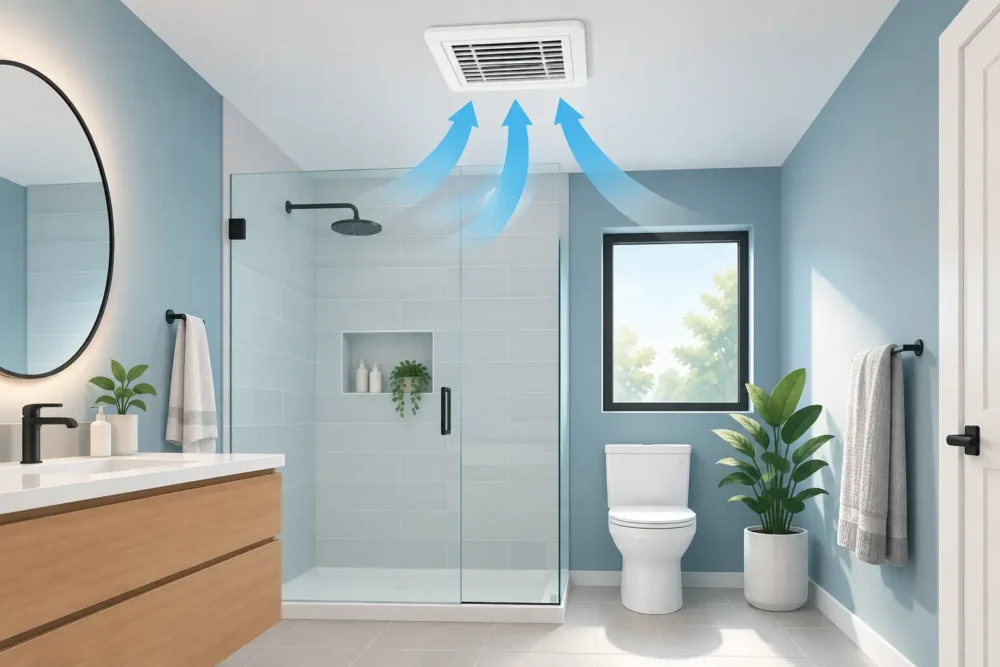
A beautiful new shower can lose its clean, finished look faster than homeowners expect when steam has nowhere to go. In Central Florida, where humidity is already part of daily life, bathroom ventilation is not a minor finishing detail. It helps protect new tile, grout, paint, cabinetry, drywall, and the comfort of everyone using the room.
For a bathroom remodel to hold up well, the exhaust fan needs to match the space, vent outdoors, and be used consistently. A fan that is too small, too loud, or improperly ducted may run without removing enough moisture. Planning ventilation alongside the shower layout, tile selection, and lighting helps create a bathroom that looks polished and performs the way it should.
Why Bathroom Ventilation Matters in Orlando Homes
Every hot shower releases moisture into the air. On a cool mirror, that moisture appears as fog. On walls, ceilings, grout joints, and inside vanity cabinets, it may be less obvious. Over time, repeated dampness can lead to peeling paint, mildew staining, swollen wood components, musty odors, and extra cleaning around the shower.
Tile is a durable finish, but tile alone does not make a bathroom waterproof or moisture-proof. Grout, caulk, drywall outside the wet area, painted ceilings, and wood trim still need protection. Good ventilation removes humid air before it can linger on those surfaces.
This is especially relevant during a bathroom renovation. Homeowners often invest in a custom tile shower, upgraded flooring, shower glass, and fresh paint because they want a space that stays attractive for years. An effective exhaust system supports that investment every day without changing the look of the room.
What a Bathroom Exhaust Fan Should Do
A properly installed bathroom fan should pull moisture and odors out of the room and discharge them outside the home. It should not simply move air into an attic, crawlspace, or another enclosed area. Sending humid air into those spaces can create a separate moisture problem that is harder to see and more expensive to correct.
The fan should also run quietly enough that people will actually use it. A loud, rattling fan may technically work, but many homeowners switch it off too soon because of the noise. Quiet operation is not just a luxury feature. It makes regular use more likely.
Performance depends on more than the fan itself. The duct run, duct size, number of bends, exterior vent cap, and installation quality all affect airflow. A strong fan connected to a restricted or poorly routed duct may still underperform.
Understanding Fan Size and CFM
Fan capacity is measured in CFM, or cubic feet per minute. In simple terms, CFM indicates how much air the fan can move. A small powder room generally needs less capacity than a large primary bathroom with a walk-in shower, separate tub, toilet room, and high ceilings.
A common starting point is to use at least 1 CFM per square foot of bathroom floor area. For example, a 70-square-foot bathroom may need a fan rated around 70 CFM or more. Larger bathrooms and bathrooms with separate enclosed areas may require additional capacity or more than one fan.
That guideline is useful, but it is not the whole story. A bathroom with a large open shower, frequent use by a busy household, or a long duct route may benefit from a higher-capacity unit. If the fan will serve a water closet inside a larger bathroom, that enclosed space may need its own ventilation strategy. Local code requirements and the home’s layout also matter.
During remodeling, it is worth discussing fan placement and sizing before tile, drywall, and finished ceilings are complete. That is the easiest time to improve duct routing and place the fan where it can do the most good.
Noise Ratings Matter More Than Many Homeowners Think
Fan noise is measured in sones. Lower sone ratings mean quieter operation. A very quiet fan may be rated around 1 sone or less, while older or basic models can be much louder.
The right choice depends on your priorities. A hall bathroom that sees quick daily use may be fine with a standard fan. In a primary bathroom designed as a calm retreat, a quieter model is often worth considering. It allows the fan to run during and after a shower without interrupting conversation, music, or a peaceful morning routine.
Keep in mind that quiet does not mean weak. Many quality fans provide both low noise and strong airflow when they are sized and installed correctly.
Where the Fan Should Be Located
The most effective location is usually near the main moisture source, often close to the shower or tub. In a larger bathroom, placing a single fan too far from the shower can leave steam lingering in the wet area, especially if the door is closed.
There are situations where one fan is not enough. A large primary bathroom may benefit from separate ventilation for the shower area and toilet room. A bathroom with a closed-off toilet closet can trap odors and humidity behind a door, even when the main fan is running.
Placement must be coordinated with lighting, shower glass, ceiling design, and framing. A remodeling contractor can help homeowners make those decisions early, so the finished room feels intentional rather than patched together around mechanical needs.
The Best Controls Make Good Ventilation Easier
A fan only helps when it runs long enough. Many people turn the switch off as soon as they leave the bathroom, but moisture can remain in the air after the shower ends. The goal is to continue exhausting humid air until the room has had time to dry.
A timer switch is one of the simplest upgrades. It lets you set the fan to run for a chosen period, often 20 to 60 minutes, without needing to remember to return and shut it off. Humidity-sensing controls are another option. They can activate the fan when moisture levels rise and turn it off once the room has dried.
These controls are especially useful for family bathrooms, guest baths, and busy mornings. They reduce guesswork and make it easier to protect the room without changing anyone’s routine.
Common Ventilation Problems to Watch For
If a bathroom stays humid long after a shower, something may need attention. Condensation on the ceiling, recurring mildew on grout or caulk, peeling paint, and a persistent musty smell are all signs that moisture is not leaving the room quickly enough.
Other warning signs include a fan that makes grinding or rattling noises, weak airflow at the exterior vent, or a vent cover that does not open properly. Dust buildup can reduce performance, and older fans may simply be undersized for the room.
A fan can also struggle when the bathroom door is tightly closed and there is little replacement air entering the room. In some layouts, a small gap below the door or another planned air path helps the fan draw air effectively. The solution depends on the room, so it is better to assess the full setup than replace the fan alone and hope for a different result.
Ventilation and Your Bathroom Remodel Plan
Ventilation is easiest to improve when walls and ceilings are already open for renovation. That is the time to correct an improper exhaust path, upgrade an old fan, add a timer, or plan a second fan for a larger layout. It can also prevent compromises later, such as cutting into newly finished tile or repainting a completed ceiling.
At Work Tile LLC, we encourage homeowners to think about how their new bathroom will perform after the final tile is installed. The right shower design, quality materials, professional installation, and practical moisture control all work together. A well-planned remodel should feel beautiful on day one and remain easier to maintain through the years.
Before selecting finishes, take a moment to look up at the existing fan and ask a practical question: will it truly keep up with the bathroom you are creating? Addressing that question early can help protect the bathroom of your dreams long after the renovation is complete.