
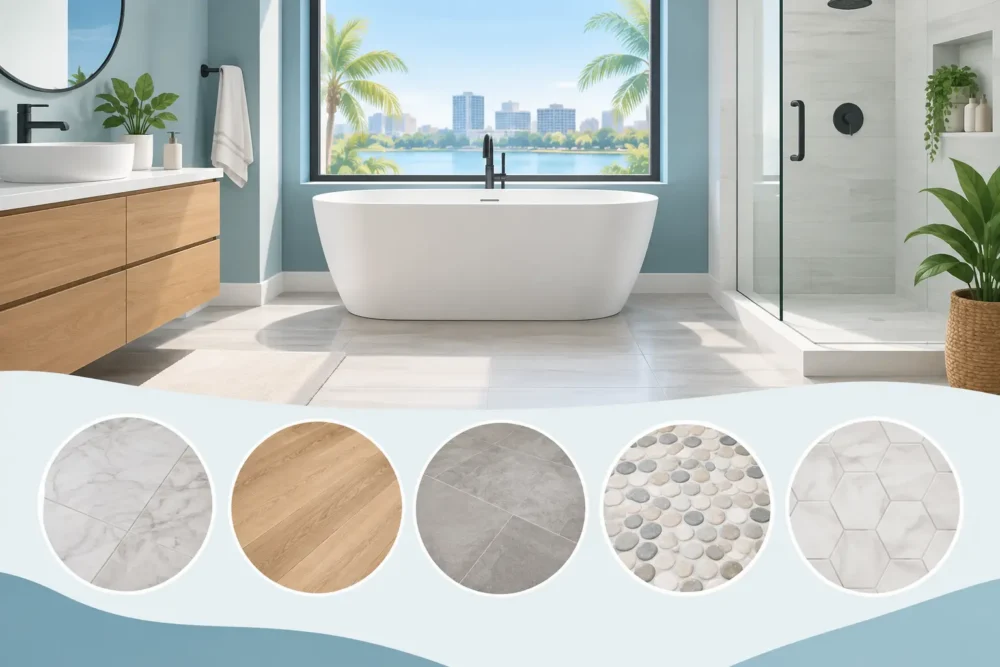
A bathroom floor can look clean and updated on installation day, then reveal its real quality months later when it faces wet towels, dripping showers, humid Florida air, and daily family traffic. The right bathroom flooring should do more than match the vanity or wall color. It needs to handle moisture, feel comfortable underfoot, clean up easily, and hold its appearance for years.
For Orlando homeowners, tile remains a leading choice because it offers the water resistance and design flexibility a busy bathroom needs. Still, it is not the only option. The best material depends on the condition of the subfloor, the bathroom layout, your budget, and how you use the space.
What a Bathroom Floor Needs to Handle
Bathrooms are hard-working rooms. Water gets tracked out of the shower, toilets can leak without warning, and hair products, cosmetics, and cleaning products all end up on the floor. A flooring choice that works well in a low-traffic bedroom may not be a good fit here.
Start with water resistance. The surface should not swell, stain, peel, or break down after repeated exposure to moisture. Just as important, the seams and edges need proper treatment. Even a water-resistant material can have problems if water reaches an unprotected joint, wall edge, or damaged subfloor.
Slip resistance matters too, especially in a bathroom used by children, older adults, or anyone stepping out of a shower. A very polished floor can look striking, but a matte or lightly textured finish is often the safer everyday choice. Finally, consider maintenance. A floor that needs special products or frequent resealing may not suit every household.
Porcelain Tile: A Dependable Bathroom Flooring Choice
Porcelain tile is one of the strongest all-around materials for bathroom floors. It is dense, highly water resistant, available in countless colors and styles, and suitable for everything from a small guest bath to a full primary bathroom renovation.
Homeowners often choose porcelain because it can create almost any look. Wood-look planks bring warmth without the concerns of real hardwood near water. Marble-look tile gives a bathroom a refined appearance with far less maintenance than natural stone. Large-format tile can make a smaller bathroom feel more open by reducing the number of grout lines.
There are practical trade-offs. Tile feels cooler than vinyl under bare feet, although that can be welcome during Orlando’s warmer months. It also requires a properly prepared, level substrate. If the subfloor moves or the installation is rushed, grout can crack and tile can become loose over time. Professional preparation, quality setting materials, and careful layout make a major difference in the finished result.
Choosing the Right Tile Size and Finish
Large tiles can create a clean, modern floor, but they are not automatically best for every bathroom. In a small or irregularly shaped room, more cuts may be needed around the toilet, vanity, and doorways. Smaller tiles can be easier to shape around obstacles and offer more grout lines for traction.
For shower-adjacent areas, a satin, matte, or textured porcelain tile is usually more practical than a high-gloss finish. If you love the appearance of polished tile, it may be better suited for bathroom walls or a less frequently wet powder room.
Ceramic Tile: Budget-Friendly With Plenty of Style
Ceramic tile is another popular bathroom option. It can provide a beautiful finished floor at a more budget-conscious price point than many porcelain selections. Modern ceramic tile comes in a wide range of colors, patterns, and sizes, so it can work in traditional, coastal, contemporary, or transitional bathroom designs.
The key difference is that ceramic is generally less dense than porcelain. For a typical residential bathroom, a quality ceramic floor tile can perform well when it is rated for floor use and installed correctly. However, homeowners planning a high-traffic primary bathroom or looking for maximum long-term durability may prefer porcelain.
A professional installer can help you compare specific tile products rather than choosing based on appearance alone. Not every tile labeled as decorative is meant to carry foot traffic, and wall tile should never be used on a floor.
Luxury Vinyl Flooring: Softer and Often Faster to Install
Luxury vinyl plank and luxury vinyl tile have become popular for bathroom updates because they are comfortable underfoot, easy to clean, and available in convincing wood and stone looks. Vinyl can be a smart option when homeowners want a softer surface than tile or want to keep the project budget focused on a new shower, vanity, or lighting.
Many luxury vinyl products are marketed as waterproof, but that does not mean every installation is protected from every leak. Water can still work around the perimeter, beneath trim, or through poorly sealed areas. Product quality and installation details matter.
Vinyl is especially worth considering for a half bath, a bathroom renovation with a limited budget, or a home where comfort underfoot is a top priority. For a full bathroom with a tiled shower and frequent water exposure, porcelain tile usually offers greater peace of mind and a more permanent feel.
Natural Stone: Beautiful, but More Demanding
Natural stone floors such as marble, travertine, and slate can make a bathroom feel custom and elevated. Every piece has natural variation, which gives the room character that manufactured materials cannot fully duplicate.
That beauty comes with more care. Stone may require sealing, and some varieties can be sensitive to acidic products, staining, or etching. Honed finishes are generally more practical for bathroom floors than polished stone because they offer a softer look and better traction.
Stone can be the right choice for homeowners who love its natural appearance and are comfortable with regular maintenance. If you want a similar look with simpler care, porcelain tile that mimics stone is often a better fit.
Bathroom Flooring Details That Should Not Be Overlooked
A successful floor installation is about more than the material you see. Before new flooring goes down, the existing floor should be evaluated for soft spots, uneven areas, old water damage, and movement. Covering a damaged subfloor may hide a problem temporarily, but it will not correct it.
Grout selection also affects the final look and upkeep. Light grout can make a small space feel bright, while medium or darker grout can be more forgiving in a high-use family bathroom. High-performance grout products can provide improved stain resistance, though regular cleaning is still the best way to keep joints looking fresh.
Transitions at the bathroom doorway deserve planning as well. The new floor should meet adjoining flooring cleanly without creating an awkward height change or unfinished edge. Around the toilet, vanity, and tub, precise cuts and appropriate finishing help protect the floor while giving the room a polished appearance.
Matching Your Floor to Your Bathroom Project
If you are updating only the floor, work with the colors already in the room. A neutral porcelain tile in warm beige, soft gray, sand, or off-white can refresh an older bathroom without forcing a full renovation. Patterned tile can add personality in a powder room, where it is easy to make a bold design choice in a small area.
For a complete remodel, the floor should support the larger design. A wood-look tile can balance a bright white shower surround. A marble-look floor can complement a modern vanity and clear shower glass. A small mosaic accent may look beautiful in a shower floor, while a larger porcelain format provides a calmer visual foundation in the rest of the bathroom.
It also helps to think ahead. A flooring style that looks good today should still feel right if you replace the vanity, mirror, or paint color later. Timeless tile does not have to be plain. It simply gives you flexibility as your home changes.
Get the Installation Right From the Start
The best bathroom flooring material can only perform as well as its installation. Proper layout, substrate preparation, waterproofing where needed, grout work, and clean finishing details all protect your investment. This is particularly important in older Orlando homes, where floors may have uneven areas or signs of past moisture issues.
Work Tile LLC helps homeowners choose practical tile solutions that fit their style, bathroom layout, and renovation budget. As a family-owned, fully insured local contractor, the team focuses on the details that turn a new floor into a lasting part of a finished bathroom.
Before choosing a color or pattern, look closely at how your bathroom is used every day. The floor that makes your morning routine safer, easier to clean, and more enjoyable is the one that will keep improving the room long after the renovation is complete.