
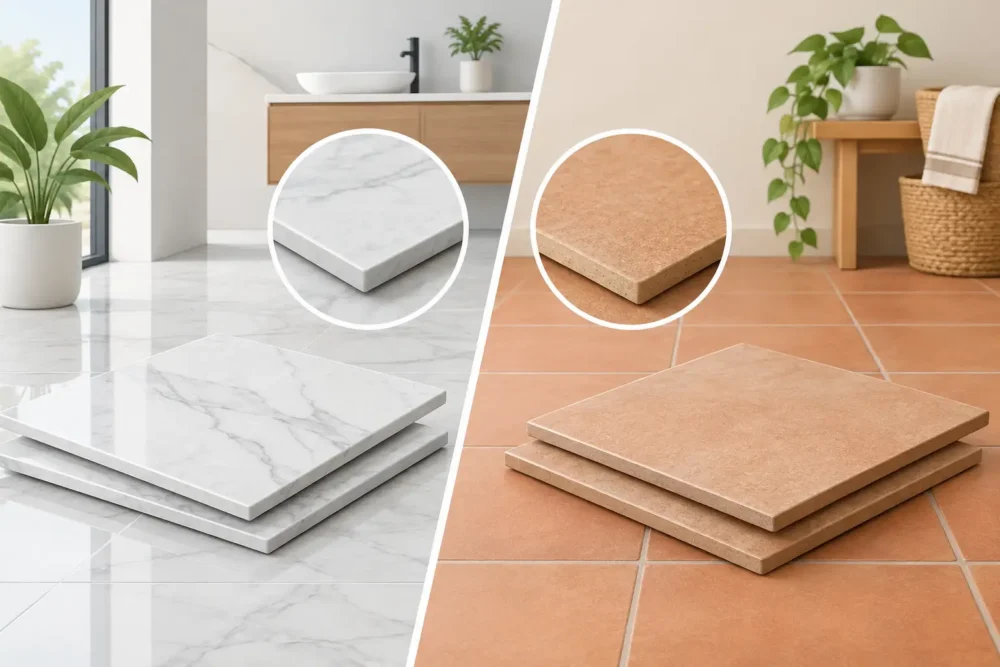
A tile sample can look perfect under showroom lighting, then raise practical questions once it is headed for a shower, kitchen, or busy family floor. Porcelain versus ceramic tile is one of the most common decisions homeowners face during a remodel, and the right answer depends less on which material is “better” overall and more on where it will be installed and how your household uses the space.
Both options can create a clean, durable finish that makes an outdated room feel completely renewed. The differences show up in water exposure, traffic, installation needs, budget, and the specific look you want for your home.
Porcelain Versus Ceramic Tile: The Basic Difference
Porcelain and ceramic are both made from clay and fired in a kiln, but porcelain is made with finer clay and fired at higher temperatures. That process produces a denser tile with very low water absorption. Industry standards classify porcelain as having a water absorption rate of 0.5% or less.
Ceramic tile is still a strong, dependable material. It is often slightly more porous and usually easier to cut than porcelain. It comes in a wide range of colors, sizes, patterns, and finishes, which makes it a popular choice for walls, backsplashes, and many residential floors.
A simple way to think about the decision is this: porcelain is typically the tougher choice for wet areas and high-traffic floors, while ceramic can be an excellent, budget-friendly choice where the demands are lighter. There is overlap, though. A quality ceramic floor tile may work well in the right room, and some porcelain designs are better suited to walls than floors. The tile’s rating, finish, and intended use matter as much as the material name.
Where Porcelain Makes the Most Sense
Porcelain is often the first choice for shower walls, shower floors, bathroom floors, and main living areas. Orlando homes deal with humidity, wet swimsuits, muddy shoes, and active households, so a low-absorption tile brings real peace of mind in areas that see regular moisture.
For a shower renovation, porcelain is especially practical because it resists water absorption and holds up well over time when installed over a properly prepared waterproof system. It is also a strong option for bathroom flooring around tubs, vanities, and walk-in showers.
Porcelain is available in designs that closely resemble natural stone, polished concrete, hardwood, and marble. Large-format porcelain can create a sleek, modern floor with fewer grout lines. Wood-look porcelain gives homeowners the warmth of a plank-style floor without the concerns that come with installing real wood in wet rooms.
Its density does bring a trade-off. Porcelain can be harder to cut, drill, and install correctly. Large tiles require a flat surface, the right mortar coverage, careful layout, and professional tools. Saving on material only to compromise on installation can lead to lippage, cracked tile, or water-related problems later.
Porcelain is a strong fit for
Porcelain is usually worth considering for full shower surrounds, shower floors with an appropriate slip-resistant finish, bathroom floors, laundry rooms, entryways, kitchens, and high-traffic areas. It is also a smart choice when you want one durable flooring material to continue through several rooms for a more connected look.
When Ceramic Tile Is the Better Choice
Ceramic tile is not a lesser material. In the right application, it is a beautiful and practical choice that can help keep a renovation on budget. It is especially well suited for kitchen backsplashes, bathroom walls, accent walls, fireplace surrounds, and low-traffic floors that are not exposed to constant moisture.
A backsplash is where ceramic really shines. Homeowners can choose from classic subway tile, handmade-look tile, bright colors, textured finishes, and decorative shapes without paying for performance they may not need behind a kitchen counter. Ceramic is often easier to cut around outlets, cabinets, and windows, which can help support a more efficient installation.
Ceramic wall tile can also create a polished shower surround when the shower is properly waterproofed behind the tile. The waterproofing system does the critical work of protecting the wall structure. Tile and grout are durable finish materials, but they should never be treated as the only waterproof barrier in a shower.
For a guest bathroom or powder room, ceramic flooring may be a good option if the tile is rated for floor use. Check the manufacturer’s recommendations before choosing. Some ceramic tiles are intended only for walls and may not have the strength or surface traction needed underfoot.
Cost: Look Beyond the Price Per Square Foot
Ceramic tile often costs less per square foot than porcelain, although price ranges can overlap significantly. Premium ceramic with specialty glazes may cost more than a basic porcelain tile. Tile size, edge detail, pattern, and finish can all affect the final material cost.
Installation is part of the full budget as well. Porcelain’s density can require more labor and specialized cutting equipment. Mosaic tile, herringbone patterns, large-format panels, and detailed trim work can add labor whether the material is porcelain or ceramic.
The best value is not always the lowest-priced tile. A well-chosen tile that suits the room, paired with correct surface preparation and skilled installation, can look great for years. For a bathroom remodel, it is often wiser to reserve enough of the budget for waterproofing, layout, and finishing details rather than spending everything on the tile itself.
Consider Finish, Safety, and Maintenance
The surface finish deserves as much attention as the tile material. A glossy porcelain floor can be beautiful, but it may become slippery when wet. For shower floors and bathroom floors, look for tiles with suitable traction. Smaller mosaic tiles are often useful on shower floors because the additional grout joints provide more grip and allow the floor to follow the shower slope.
Polished tile can make a room feel brighter and more formal, while matte tile offers a softer appearance and often hides water spots and daily dust better. In a busy household, a matte or lightly textured floor may be easier to live with than a high-gloss surface.
Both porcelain and ceramic are fairly easy to maintain. Regular sweeping and mopping with a tile-safe cleaner will handle most everyday care. Grout needs more attention than the tile itself, especially in showers and on light-colored floors. Choosing a grout color that works with your lifestyle can reduce the appearance of staining and make maintenance more manageable.
Avoid assuming that porcelain means maintenance-free. Tile is durable, but grout joints, caulked changes of plane, and shower seals should be inspected over time. Promptly addressing loose grout, cracked caulk, or water damage helps protect the work behind the finished surface.
How to Choose Tile for Each Room
Start with the room’s real conditions. A kitchen backsplash needs style and easy cleanup. A primary shower needs water resistance, proper waterproofing, and a finish that feels safe underfoot. A family-room floor needs durability, comfort, and a color or pattern that works with everyday life.
Then consider the scale of the room. Large-format porcelain can make an open floor feel expansive, but a small bathroom may benefit from a tile size and layout that minimizes awkward cuts. A feature wall may be the right place for bold ceramic color or texture, while a neutral porcelain floor can give the room a long-lasting foundation.
Bring samples home when possible. Look at them in morning light, evening light, and beside your cabinet color, countertop, paint, and fixtures. A tile that looks warm in a store may read cooler in your home. This small step can prevent a costly design regret.
For homeowners planning a bathroom, shower, flooring, or backsplash update, Work Tile LLC can help match the material to the project rather than pushing a one-size-fits-all answer. A clear plan for tile selection, layout, and installation helps the finished room look intentional from every angle.
The best tile is the one that fits your room, your budget, and the way you live. Choose porcelain where extra moisture resistance and durability earn their keep, choose ceramic where its design flexibility and value make sense, and give the installation the care it deserves.