
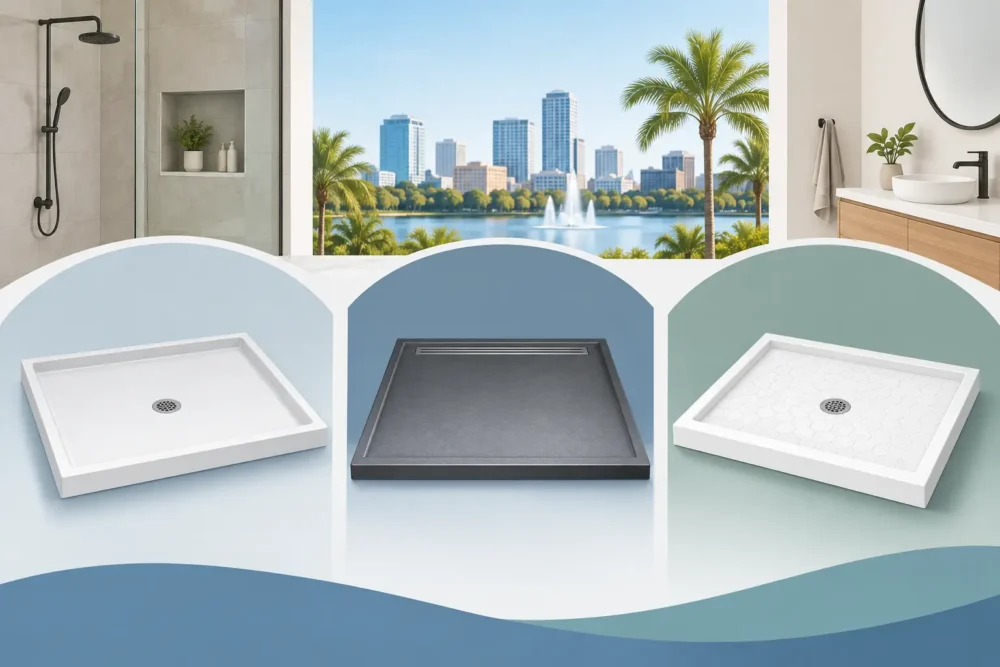
A shower can look completely new with fresh tile and glass, but the base underneath does much of the hard work. This shower pan comparison helps Orlando homeowners choose a foundation that fits their bathroom layout, renovation budget, cleaning preferences, and long-term plans. The right choice is not always the most expensive one. It is the one that drains correctly, supports the finished design, and is installed with careful waterproofing.
For a bathroom remodel, the shower pan affects more than appearance. It determines where the drain can go, how high the shower entry sits, whether large-format tile will work well, and how much flexibility you have with a custom layout. Starting with the base makes the rest of the shower design easier to plan.
Shower Pan Comparison: The Main Options
Most residential shower bases fall into four practical categories: acrylic or fiberglass prefab pans, solid-surface pans, tile-ready shower systems, and traditional mortar-bed pans. Each can be a good fit when it is matched to the right project.
Acrylic and fiberglass shower pans
Acrylic and fiberglass pans are factory-made, one-piece shower bases. They are commonly available in standard sizes, such as 32-by-60-inch or 36-by-48-inch rectangles, along with neo-angle and corner options. They are often selected for tub-to-shower conversions, guest bathrooms, rental properties, and remodels where homeowners want a clean update without the cost of a fully tiled floor.
The biggest advantage is speed. Because the slope and drain opening are already formed, installation can move more quickly than a custom tile shower floor. The smooth surface is also easy to clean and has fewer grout lines. For a busy household, that lower-maintenance finish is a real benefit.
The trade-off is design flexibility. You need a pan that matches the exact opening and drain location, or the plumbing and surrounding walls may need adjustment. Fiberglass can feel lighter and may show wear sooner than a higher-quality acrylic base. Both materials also need solid, level support below them. A pan that is not properly bedded can flex, creak, or develop stress cracks over time.
Solid-surface shower bases
Solid-surface pans are a step up in feel and appearance. They are usually made from engineered stone or composite material, with a low-profile shape and a more substantial surface than fiberglass. Many have a matte finish and a texture designed to improve footing without looking overly rough.
These bases work especially well for homeowners who want a modern, low-maintenance shower with a cleaner look than a traditional molded pan. They come in a wider range of colors and can sometimes be trimmed to fit during installation, depending on the manufacturer and model. That can help when an older Orlando bathroom is not perfectly square.
Cost is the main consideration. Solid-surface bases are heavier and generally cost more than acrylic or fiberglass. They also require careful handling and proper subfloor or slab preparation. Still, for a primary bathroom where durability and a polished finish matter, the investment can make sense.
Tile-ready shower pans
Tile-ready pans are prefabricated waterproof bases made to receive tile directly. Many are constructed from lightweight foam, while others use denser composite materials. They include a pre-sloped surface and a drain assembly designed to work with the system.
This option gives homeowners the custom look of a tile shower floor without building the entire slope by hand. It is a popular choice for a shower remodel where the floor tile needs to coordinate with the walls, niche, bench, or bathroom flooring. A tile-ready pan can also support a linear drain design, which can create a sleek look with larger tile pieces.
The key point is that tile does not make a shower waterproof. The pan, seams, drain connection, and wall waterproofing system must work together behind the tile. A properly installed system can perform very well, but shortcuts with thinset, seams, corners, or drain flashing can lead to hidden moisture damage. This is one area where experienced tile installation matters as much as the materials you choose.
Traditional mortar-bed shower pans
A traditional mortar-bed shower pan is built on site. It uses a carefully formed sloped mortar base, a waterproof liner or surface-applied waterproofing membrane, and a drain system. Once waterproofed and tested, it can be finished with nearly any suitable shower tile.
This is often the best answer for a custom shower footprint, an unusual drain position, a curved entry, or a renovation where standard pan sizes simply do not fit. It gives a skilled installer the flexibility to create the right slope for the space rather than forcing the room to fit a factory-made base.
Mortar beds take more labor and more time than installing a ready-made pan. They also depend heavily on workmanship. The floor must slope consistently toward the drain, without low spots where water can sit. When built correctly, however, a custom mortar-bed shower is durable, repairable, and well suited to a high-end tiled bathroom.
How to Choose the Right Shower Base
The best shower pan starts with the room, not a product photo. Measure the opening, identify the existing drain location, and look at the condition of the floor or concrete slab. Many Orlando homes are built on slabs, which can make moving a drain possible but more involved than it would be over a wood subfloor. That additional plumbing work should be considered early, before finalizing the shower layout.
Next, decide how much customization you truly need. If your goal is a straightforward replacement shower with easy cleaning, an acrylic or solid-surface base may be the practical choice. If your vision includes matching floor tile, a bench, a larger shower, or a specific drain placement, a tile-ready or mortar-bed system may better support the finished design.
Think about daily use, too. A smooth prefabricated base is simple to maintain. Small mosaic tile on a shower floor provides many grout lines, but those grout lines can add traction. Larger floor tile can look more contemporary, yet it must be rated for wet-floor use and installed with the correct slope. The safest, best-looking option depends on the tile, texture, layout, and who will use the shower.
Low-Threshold and Curbless Shower Considerations
Low-threshold showers are popular because they create a more open look and make stepping in and out easier. A curbless shower takes that idea further by bringing the bathroom floor close to the shower entry level. It can be an excellent upgrade for aging in place, accessibility planning, or a modern spa-style bathroom.
But curbless is not automatically the right fit for every renovation. The floor needs enough depth to create proper drainage, and the shower area must be waterproofed beyond the immediate wet zone. On a concrete slab, achieving the needed recess and slope can require additional planning. A low curb often provides a similar visual benefit with fewer structural changes.
Good drainage matters in any shower, but it becomes even more critical with a low-entry design. The base must direct water efficiently to the drain, and the glass layout should help contain normal spray. A beautiful curbless shower that sends water into the bathroom is not a successful remodel.
What Matters More Than Pan Material
Homeowners often compare materials while overlooking installation details that have a bigger effect on longevity. No shower pan performs well if the drain is not properly connected, the base is not fully supported, or waterproofing is incomplete at corners and wall transitions.
Before work begins, confirm the finished shower size, drain type, curb height, wall tile plan, and glass-door location. These pieces affect one another. For example, a center drain may work well with mosaic tile, while a linear drain can support a different floor layout. A heavy frameless glass door may also influence curb and wall framing requirements.
It is also wise to plan for access and maintenance. A well-designed shower should have cleanable corners, practical shelving, and a drain that can be serviced if needed. The goal is not just to create a shower that photographs well on day one. It should continue to feel comfortable and look polished after years of everyday use.
Make the Choice Fit the Whole Remodel
For a quick, budget-conscious update, a quality acrylic or fiberglass pan can be a smart solution. For a refined, low-maintenance primary bath, solid surface offers a durable upgrade. For a custom tile shower, tile-ready and mortar-bed systems provide the design freedom many homeowners want, provided the waterproofing and installation are handled correctly.
A family-owned, fully insured bathroom specialist can help you compare the real costs behind each option, including plumbing changes, tile selections, glass, and needed floor preparation. Work Tile LLC helps homeowners make those decisions with practical recommendations that fit the space and the budget.
The best shower pan is the one you will not have to think about once the project is complete: it feels solid underfoot, drains without trouble, supports the style you chose, and gives your bathroom a finished look you can enjoy every morning.