
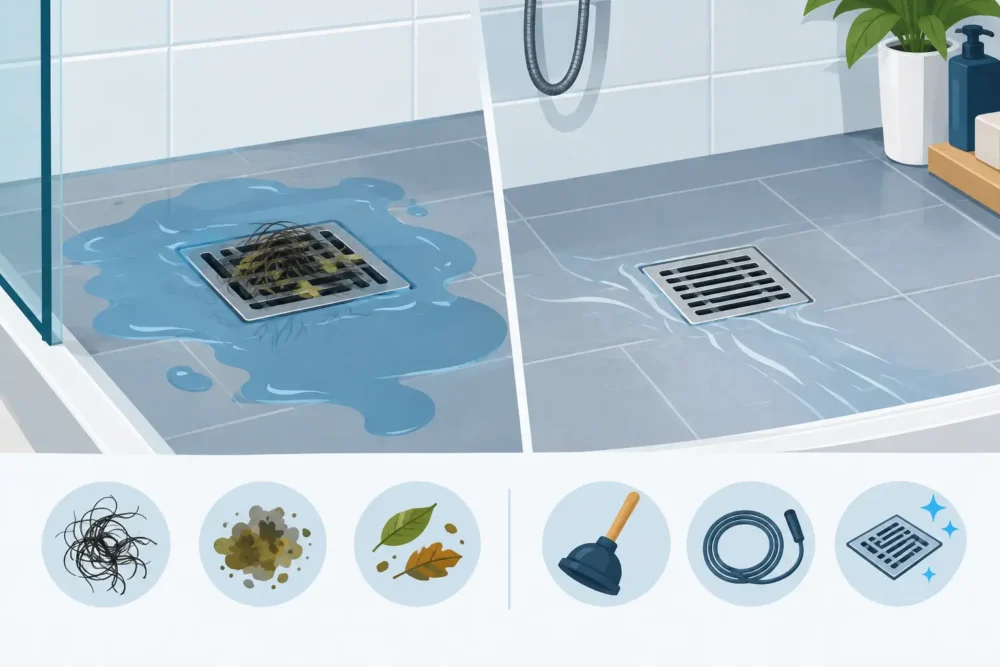
A shower that leaves water around your feet is more than a daily annoyance. Shower drainage problems can signal a simple hair clog, but they can also point to issues below the tile that deserve prompt attention. For Orlando homeowners, where humidity can make bathrooms slow to dry, standing water and hidden leaks can quickly lead to mildew, damaged flooring, or a shower that no longer feels clean and comfortable.
The right fix depends on where the water is stopping. A slow drain, water escaping onto the bathroom floor, a musty odor, and a soft area around the shower are different problems with different causes. Knowing the warning signs helps you make a practical decision before a small repair turns into a larger renovation.
Common Shower Drainage Problems and What Causes Them
Most drainage concerns begin at the drain opening, but not all of them end there. The goal is to identify whether water is moving slowly through the plumbing, getting past the shower enclosure, or slipping beneath the finished surface.
Hair, soap residue, and everyday clogs
Hair is the most common reason a shower begins draining slowly. It catches in the drain cover and combines with soap residue, body oils, and product buildup. Over time, that mixture narrows the pipe and makes the water pool.
If the shower has always drained well and the problem developed gradually, a clog near the drain is likely. Remove the drain cover if it is accessible and clear visible debris. A plastic drain tool can often pull out hair that is sitting close to the surface. Avoid repeatedly using harsh chemical drain cleaners, especially in an older home. They may not solve a deeper blockage and can be hard on plumbing components.
When more than one fixture drains slowly, such as the shower and nearby sink, the issue may be farther down the plumbing line. That is a good time to contact a qualified plumber rather than forcing the problem with stronger products.
A shower floor that does not slope correctly
Water should naturally move toward the drain. When it does not, you may see puddles that remain long after the shower is turned off, often along a wall, in a corner, or near the shower entry. This is not usually a drain clog. It is a slope issue.
A properly built tile shower floor has a consistent pitch toward the drain. Even a small low spot can leave water behind, while an incorrect overall slope can cause frequent pooling across a larger section of the floor. This can happen in an older shower, after a poor-quality remodel, or when tile was installed over an uneven base.
Surface puddling may seem minor, but standing water puts extra stress on grout and caulk lines. It also makes the shower harder to keep clean. The dependable repair often involves rebuilding the shower floor so the waterproofing and tile are both set on the correct slope. A quick layer of grout on top rarely corrects the real issue.
Water escaping at the shower door or curb
If water appears outside the shower, the drain may be working perfectly. The problem could be a worn door sweep, a misaligned glass door, failed caulk, or a curb that was not designed to direct water back into the shower.
Look for the pattern. Water only near the door may mean the bottom seal needs attention. Water coming through a corner or wall joint may point to deteriorated caulk. If the issue happens every time someone uses the shower, even with the door fully closed, it may involve the shower pan slope or the way the glass enclosure was installed.
Replacing a simple sweep or resealing a clean, dry joint can be an appropriate maintenance repair. But if the same leak returns after caulking, it is worth having the shower evaluated. Caulk is a finish seal, not the waterproofing system behind the tile.
Failed grout, cracked tile, or aging caulk
Grout and tile create a durable finished surface, but they are not the primary barrier that protects your walls and subfloor from water. Behind a properly built tile shower should be a waterproofing system that directs moisture safely toward the drain.
Cracked tile, missing grout, and loose caulk should be repaired because they allow more water into areas that are difficult to dry. Still, the severity depends on the shower’s construction. A small crack in an otherwise sound shower may be a targeted repair. Widespread cracking, hollow-sounding tile, stained drywall outside the shower, or recurring mold can suggest movement or moisture below the surface.
This is where a careful inspection matters. Covering damaged areas without identifying the cause can hide a leak while the underlying damage continues.
A problem below the shower pan
The most serious shower drainage problems happen out of sight. A damaged liner, failed drain connection, or poorly waterproofed shower pan can allow water to reach the subfloor or framing. Signs may include a persistent musty smell, peeling paint on an adjacent wall, loose floor tile outside the shower, dark staining on a ceiling below an upstairs bathroom, or a soft feeling underfoot.
These issues need professional attention. The repair may range from replacing a drain assembly to removing and rebuilding the shower floor or the full shower. The trade-off is straightforward: a targeted repair can cost less when the problem is isolated, but a complete rebuild is often the wiser investment when the waterproofing system has failed or the shower is already outdated.
How to Troubleshoot a Slow or Wet Shower
Start with simple observations before making repairs. Notice whether the water pools only while the shower is running or remains after it is off. Check whether the drain is slow every day or only after a heavy amount of hair and product buildup. Look along the shower perimeter, glass door, curb, and nearby baseboards for dampness or discoloration.
For a basic clog, clear the visible debris and rinse the drain with hot water. If the drain remains slow, a plumber can determine whether the blockage is deeper in the line. Do not ignore recurring backups, gurgling sounds, or water rising in another fixture. Those symptoms can indicate a larger plumbing issue.
For water outside the shower, dry the area completely and use the shower as normal while watching where the moisture first appears. This can help distinguish a door-seal issue from a leak at the curb or wall. Do not keep using a shower with visible water damage, soft flooring, or water leaking through a ceiling. Stopping use early can limit the damage while the source is assessed.
When a Shower Remodel Is the Better Fix
Not every drainage concern calls for a remodel. A cleanout, replacement drain cover, new door sweep, or professional re-caulking can solve many maintenance problems. But a shower with repeated leaks, poor floor slope, aging tile, loose surfaces, or failed waterproofing may be ready for a more complete solution.
A shower remodel gives homeowners the chance to correct the parts that cannot be seen after tile is installed. That includes setting the right floor pitch, building a reliable waterproofing layer, positioning the drain correctly, and selecting tile that suits the space and cleaning routine. It can also improve everyday use with a modern glass enclosure, a larger shower layout, built-in niches, or safer entry details.
For established homes around Orlando, this is often the point where repair and design work meet. If the shower already needs significant demolition, choosing durable tile and a layout that fits your family can make the investment feel worthwhile for years to come.
Protect Your New Shower From Future Drainage Issues
Good maintenance helps a well-built shower perform better. Use a hair catcher that does not restrict water flow, remove visible hair regularly, and keep the drain cover clear. Clean grout and tile with products appropriate for the material, and inspect caulk around corners, fixtures, and glass on a regular basis.
Most of all, pay attention when the shower changes. A new puddle, a drain that slows down, or a faint odor is easier to address before moisture has time to travel behind walls or under flooring. A properly designed, professionally installed shower should move water where it belongs – down the drain – so your bathroom stays dry, polished, and ready to enjoy.