
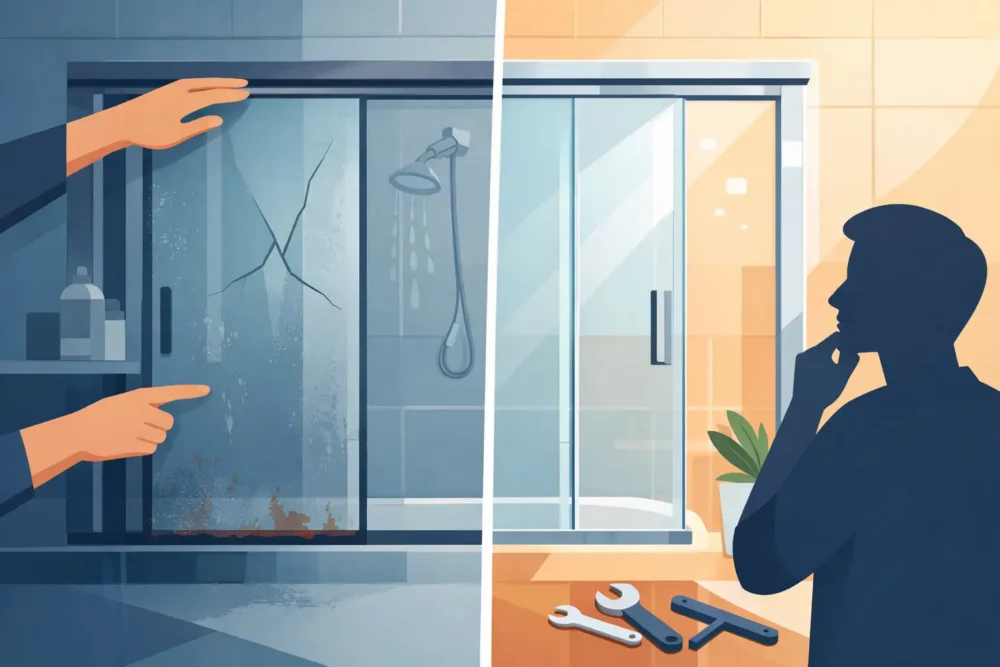
A shower door that sticks, rattles, leaks onto the bathroom floor, or looks permanently cloudy can make an otherwise clean bathroom feel dated. Sliding shower door replacement is often a practical upgrade for Orlando homeowners who want a more polished shower without taking on a full bathroom renovation. The right new door can improve daily use, reduce cleanup, and give the entire space a fresher look.
Still, a new sliding door is not always a simple swap. The condition of the shower opening, wall tile, curb, framing, and existing glass all affect which replacement will fit and perform well. Planning the project carefully helps prevent the most common problems: doors that do not glide properly, water escaping through gaps, or hardware that does not sit securely against the tile.
Signs It Is Time for Sliding Shower Door Replacement
Some shower door problems can be repaired with new rollers, guide pieces, sweeps, or track cleaning. If the glass and frame are in good shape, a targeted repair may be the sensible choice. However, replacement is usually worth considering when the door has several ongoing issues or the bathroom is already due for an update.
Persistent leaks are one of the clearest signs. A small amount of water inside the track is normal for many framed sliding doors, but water regularly reaching the floor is not. Worn seals, a damaged bottom track, improper door alignment, or an aging curb can all contribute. Replacing the door may address the issue, but the installer should first confirm that the shower base and tile work are directing water correctly.
Cloudy or scratched glass is another common reason homeowners replace older doors. Mineral deposits from Central Florida water can build up over time, especially on textured or older glass. Some staining can be cleaned, but etched glass rarely returns to a clear finish. Rusted frames, peeling finishes, cracked rollers, and bent tracks are also signs that the door has reached the end of its useful life.
Replacement can also be a design decision. Many older showers have bright chrome frames, thin glass, or dated patterned panels that compete with newer tile. A clean-lined door with clear glass and updated hardware lets the shower tile become the focal point.
Choose the Right Door for Your Shower Opening
Not every shower enclosure works well with every sliding door. The first decision is whether a bypass-style sliding door is the best fit for the layout. These doors use two glass panels that slide past each other, making them especially useful when there is limited room for a hinged door to swing open.
A sliding door is often a good choice for a tub-shower combination or a standard-width walk-in shower. It can provide a wide entry while keeping the bathroom floor plan clear. For a very narrow opening, however, a pivot door, fixed panel, or another enclosure style may provide easier access. The best option depends on the shower’s measurements and how the household uses the space.
Framed, Semi-Frameless, or Frameless?
Framed sliding doors have metal channels around the glass and along the bottom track. They are typically the most budget-friendly option and can be a reliable choice for a straightforward shower update. Because the frame helps accommodate slight variation in the opening, framed doors can work well in older homes where walls may not be perfectly plumb.
Semi-frameless doors reduce some of the visible metal while retaining enough structure for a sliding system. They offer a more updated appearance without always reaching the price of a heavier frameless enclosure.
Frameless sliding doors use thicker tempered glass and more substantial hardware. They create an open, modern look that pairs well with custom tile showers. They also require precise measurements and sound installation surfaces. If wall tile is cracked, loose, or poorly supported, installing heavy glass hardware over it can create bigger problems. A professional evaluation before ordering is especially valuable for this style.
Glass and Hardware Make a Big Difference
Clear glass remains a popular choice because it shows off tile, makes a smaller bathroom feel more open, and works with nearly any color palette. Frosted, rain, or privacy glass may make more sense for a shared bathroom where privacy matters more than visibility.
For hardware, brushed nickel, matte black, polished chrome, and warm metallic finishes can all work well. Rather than choosing a finish in isolation, consider the faucet, shower fixtures, cabinet hardware, and light fixtures. Matching every finish is not required, but the combination should look intentional.
Easy-clean glass coatings can also be worthwhile. They do not eliminate cleaning, especially in hard-water areas, but they can slow the buildup of soap residue and mineral spots. Regular use of a squeegee and a non-abrasive cleaner will help keep the new glass looking better longer.
Accurate Measurements Protect the Installation
Sliding shower doors are not a one-size-fits-all purchase. Even doors sold for a specific opening range need careful measurement. The width should be checked at the top, middle, and bottom because tile walls can vary slightly. Height, curb depth, wall condition, and the position of plumbing fixtures also matter.
The shower curb deserves close attention. It needs to be level enough for the bottom track or guide system to work properly, while still sloping toward the shower so water does not sit against the door. If a curb has damaged tile, loose grout, or signs of moisture underneath, installing a new door without addressing those concerns can cover up a problem rather than solve it.
Tile walls should also be checked for secure backing where the door hardware will be fastened. Drilling through tile takes care and the correct tools. More importantly, the fasteners need solid support behind the finished surface. A door may look fine on installation day but loosen over time if it was attached without proper backing.
This is one reason homeowners should avoid ordering a door based only on a quick tape-measure reading. A professional installer can verify the opening, recommend an appropriate door type, and identify whether tile or shower repairs should come first.
Coordinate the Door With a Shower Remodel
If you are already considering new shower tile, a curb rebuild, or updated fixtures, it usually makes sense to plan the glass door after those selections are made. The finished tile thickness, curb size, and wall layout can affect the final opening. Installing a new door before tile repairs or a shower remodel may mean paying to remove and reinstall it later.
For homeowners who want to refresh the shower without a full rebuild, replacement can still deliver a noticeable change. Pairing a new sliding door with fresh caulk, grout touch-ups, updated shower fixtures, and a deep cleaning can make an older shower feel far more cared for.
Work Tile LLC helps homeowners plan bathroom and shower improvements with the full picture in mind. As a family-owned, fully insured local contractor, the team can assess the tile, shower surround, and installation conditions so the finished upgrade looks right and holds up to everyday use.
What to Expect During Installation
A typical sliding door installation begins with protecting the bathroom floor and confirming the measurements before hardware is set in place. The installer prepares the tracks or guides, drills carefully through the tile where required, installs the frame or mounting hardware, hangs the tempered glass panels, and adjusts the rollers so the doors move smoothly.
The final details matter. Door panels should close evenly, overlap correctly, and stay within their guides. Seals and sweep pieces need to be positioned to direct water into the shower. Caulk is applied where appropriate, then allowed to cure before the shower is used. Your installer should explain the recommended wait time, cleaning methods, and any adjustments to watch for after installation.
A quality installation is not just about getting glass on the wall. It is about making sure the door operates safely, protects the bathroom floor, and complements the tilework you invested in.
A Better Door Starts With an Honest Assessment
Sliding shower door replacement can be a focused project, but it deserves more attention than picking a finish and ordering a standard size. The best result comes from matching the door to the shower opening, checking the tile and curb condition, and choosing materials that fit both your budget and how you use the bathroom.
If your current door is leaking, hard to operate, or taking away from a shower you otherwise enjoy, a professional assessment can clarify whether a repair, replacement, or broader shower update makes the most sense. A well-fitted door is one of those practical finishing touches that makes the bathroom feel cleaner, safer, and ready to enjoy every day.